
How Florence Nightingale Invented Modern Healthcare
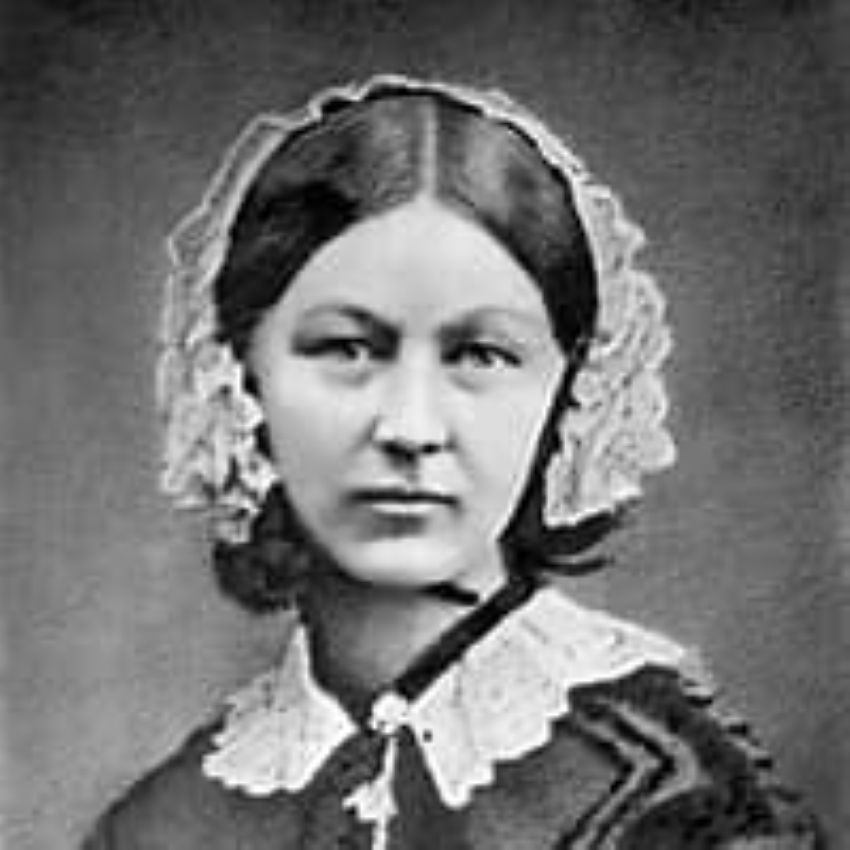
The Lady with the Lamp: How Florence Nightingale Invented Modern Healthcare
Every time you see a nurse wash their hands, check a heart rate monitor, or organize a clean hospital ward, you’re seeing the living legacy of Florence Nightingale.
Born over 200 years ago, Nightingale wasn't just a compassionate caregiver; she was a fierce statistician, a social rebel, and the woman who dragged the medical world out of the dark ages. Here is how "The Lady with the Lamp" paved the way for the healthcare we rely on today.
A Rebel with a Divine Calling
Born on May 12, 1820, into a wealthy British family, Florence was expected to live a life of leisure, tea parties, and high-society marriage. But Florence had other plans.
Despite her parents' protests, nursing was seen as "low-status" work, at the time she felt a divine calling to serve the sick. She pursued a classical education in mathematics and languages, eventually training in Germany and France to master the craft of care.
The Crimean War: More Than Just a Heroic Story
In 1854, Nightingale led a team of nurses to Turkey to care for British soldiers during the Crimean War. The conditions were horrific: more soldiers were dying from infectious diseases like cholera and typhus than from actual battle wounds.
While she earned the nickname "The Lady with the Lamp" for her nightly rounds checking on patients, her real impact was in the data. By enforcing strict hygiene standards—clean water, ventilation, and sanitation—she saw the death rate plummet from 42% to just 2%.
3 Ways She Changed the World Forever
Professionalising Nursing: In 1860, she founded the Nightingale Training School for Nurses at St. Thomas’ Hospital in London. This was the world’s first secular nursing school, transforming nursing from a "charity job" into a respected, educated profession.
The Power of Data: Florence was a pioneer in statistics. She created the "rose diagram" (a circular histogram) to prove to the government that most deaths were preventable through sanitation. She didn't just ask for change; she proved it was necessary with math.
Notes on Nursing: Her book, Notes on Nursing, remains a foundational text. She championed the idea of patient-centered care, emphasising that a nurse's job is to put the patient in the best possible condition for nature to act upon them.
A Lasting Legacy
In 1907, Nightingale became the first woman to receive the Order of Merit. Today, her birthday (May 12) is celebrated globally as International Nurses Day.
From her insistence on handwashing to her use of data-driven medicine, Florence Nightingale didn't just save lives in the 19th century—she established the blueprint for every hospital on earth.
"I attribute my success to this: I never gave or took any excuse." — Florence Nightingale
Archives
- September 2026
- July 2026
- May 2026
- October 2025
- September 2025
- August 2025
- July 2025
- February 2025
- November 2023
- October 2023
- September 2023
- December 2020
- March 2020
- February 2020
- January 2020
- October 2019
- September 2019
- August 2019
Recent articles
- First successful human bone marrow transplant
- Bridging the Gap: How MyMedic & CPA’s Bespoke Platform is Revolutionising Healthcare Relations
- How Florence Nightingale Invented Modern Healthcare
- Today, We Toast the Toastie: Happy National Cheese Toastie Day!
- Congratulations to our New Operational Lead
Contact us
If you've any questions or comments, or if you're a potential client who'd like to discuss setting up an account with MyMedic, please send us a message, so we can contact you. Alternatively, just give us a call on the number below.
Locums: If you're interested in joing the MyMedic network, please use our locum enquiry form.
MyMedic, Gresley House, Ten Pound Walk, Doncaster, DN4 5HX · Tel: 0330 043 2464 · hello@mymedic.network
© 2017-26 MyMedic.
MyMedic, Gresley House, Ten Pound Walk, Doncaster, DN4 5HX
0330 043 2464 · hello@mymedic.network